




How to Clean Rubber Shoes
Discover the best methods to clean rubber shoes using simple household items and professional techniques. Transform dirty, scuffed sneakers back to their original condition with our comprehensive cleaning guide.




Your leather purse goes everywhere with you, so it collects everything: dust, grime, makeup smudges, mystery stains, and that dull "worn" look from daily use. Learning how to clean a leather purse properly is essential for maintaining its appearance and extending its lifespan.
The problem is, leather isn't like canvas. Clean it the wrong way, and you can dry it out, fade it, or crack it, shortening its life fast.
In this guide, you'll learn how to clean a leather purse safely, from classic step-by-step care to quicker, modern options when you're short on time. Keep reading to learn how to bring your leather purse back to "like new."
Start with the right stuff so you do not accidentally sandblast your purse with chaos.
Soft microfiber cloths
Mild soap
Warm water
Leather conditioner
Soft-bristled brush
Avoid harsh cleaners, alcohol-heavy products, and too much water. Strong cleaners can strip the leather's finish and pull out natural oils, which leads to drying and cracking. Alcohol can fade color and leave stiff patches. Excess water can soak in, cause dark water spots, warp the shape, and weaken glued edges.
If you want a faster option, look for leather cleaning products or leather-safe wipes labeled for handbags, shoes, or "finished leather," plus a matching conditioner. These are made to clean accessories without wrecking the surface.
Clean leather with as little water as possible. You want the surface slightly damp, not soaked, because leather can stain, warp, or dry out if it drinks too much. Wipe in slow, gentle strokes to avoid streaks and scuffs, and do not "power scrub" like you are mad at it.
Empty everything, including tiny pockets where coins go to hide forever. Then:
Shake out loose debris and turn pockets inside out if you can
Dust the outside with a dry microfiber cloth first
Use a soft-bristled brush for seams and corners
Test any cleaner on a hidden spot, wait about 10 minutes, and check for fading or a weird, dull patch
Get the crumbs out before they become purse glitter. Use a lint roller for fabric lining or a handheld vacuum on low with a brush attachment. Spot-clean stains with a barely damp cloth and a drop of mild soap, then blot instead of rubbing.
Leave the purse open and let the interior air-dry fully before using it again, because trapped moisture equals funky smells.
For surface dirt, use a lightly damp cloth with warm water and a tiny bit of mild soap. Wipe along the grain of the leather, not in angry circles.
Work in small sections, keep your cloth clean, and finish by drying the area immediately with a fresh cloth so you do not get water marks or streaks. This technique also works well for cleaning leather shoes and other accessories.
Clean metal parts like clasps, zippers, and buckles with a cotton swab and a small amount of metal polish. Keep the polish away from the leather, because it can stain or damage the finish.
Polished hardware is not just for looks. Clean zippers and clasps move better, grind less, and are less likely to scratch the leather around them.
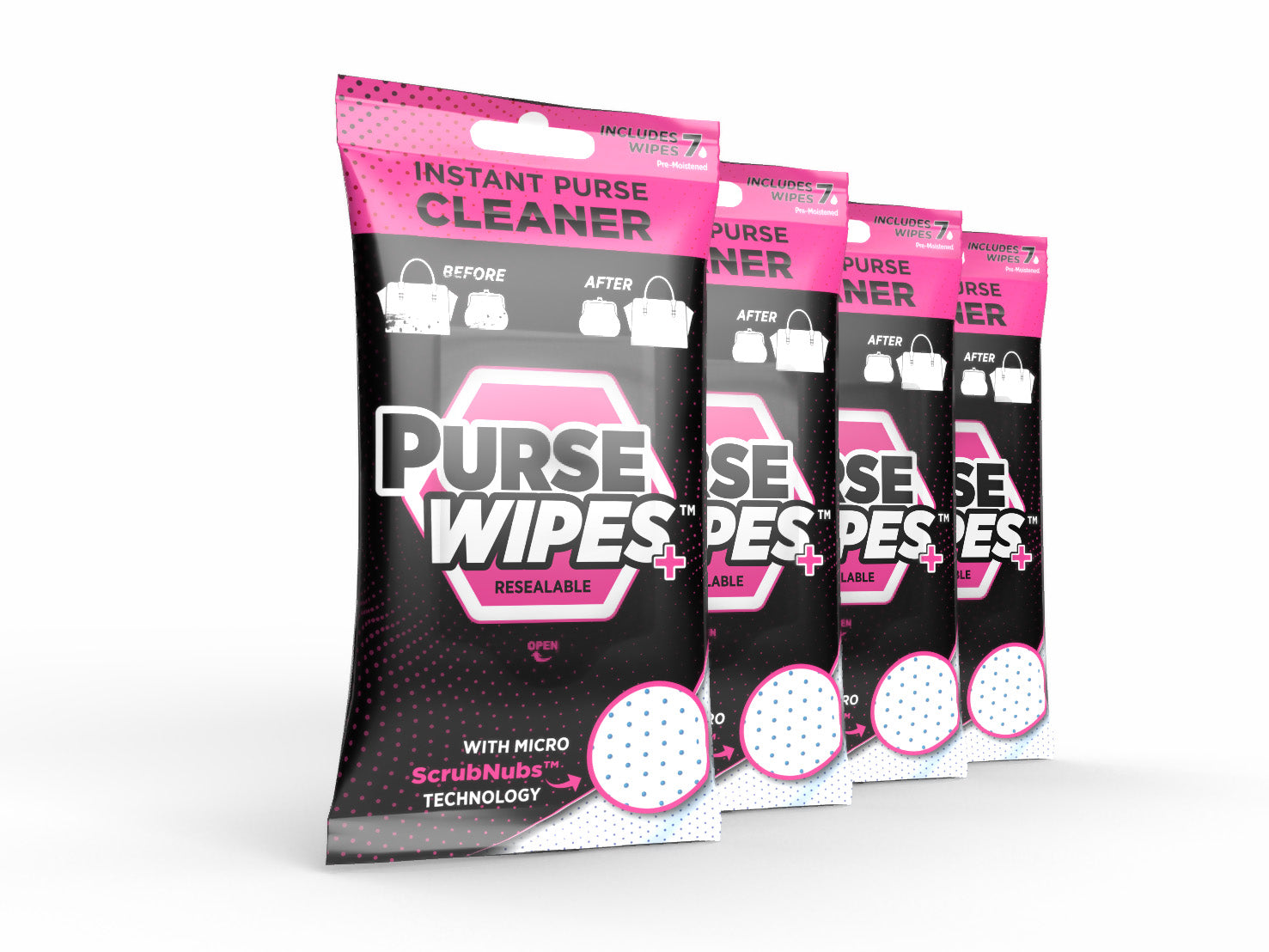
Specialized purse cleaning wipes are a handy, portable way to clean a leather purse when you do not feel like setting up soap, water, and a whole cleaning scene. They are made for accessories like purses, backpacks, and clutches, so the wipe size and moisture level are meant for smaller leather surfaces.
Think of them as the quick fix for everyday grime, not a deep-cleaning spa day. They can be a simpler alternative to traditional methods, especially for touch-ups on the go.
Pull out one PurseWIPE and unfold it fully
Gently wipe the exterior surface using slow, light strokes
Focus on high-touch zones: handles, corners, edges, and flap closures
Use a clean part of the wipe as it picks up dirt, so you are not rubbing it back in
Let the leather air-dry naturally before you use the purse again
Treat stains fast. Leather soaks up trouble like it is thirsty for drama, so quick action usually works better than waiting a week and hoping for magic.
Common stains include ink marks, surface scuffs, oil spots, and mud or dirt. Use gentle methods and light pressure because scrubbing can grind stains deeper and damage the finish, which is basically the purse's skin armor.
Ink is a "do not smear" situation. Blot lightly with a clean, dry cloth, working from the outer edge toward the center so the stain does not spread. Do not rub.
For scuffs, try gentle surface cleaning with a slightly damp microfiber cloth and a tiny bit of mild soap, then wipe along the leather grain and dry right away. Stop immediately if you see color transfer on the cloth or fading on the purse, because that means the finish is coming off too. Similar techniques work for removing scuff marks from leather shoes.
For oil or grease, skip rubbing and use powder to pull it up.
Sprinkle cornstarch, baking soda, or talcum powder on the spot
Let it sit for several hours or overnight
Brush it off with a soft cloth, then repeat if needed
For water stains, blot moisture with a dry cloth instead of wiping, which can spread the mark. Let it air-dry slowly at room temperature. No hair dryer, no heater, no sunny windowsill. Older water stains can be stubborn and may need a commercial leather cleaner made for finished leather.
Mud is a two-stage villain. If it is wet, lift off the excess gently with a dry cloth or paper towel, using light pressure so you do not push it deeper into the leather. If it is dry, use a soft-bristled brush to break up and remove the dirt first, then wipe with a lightly damp cloth and dry right away.
Finish by applying a small amount of leather conditioner to the cleaned area so the leather stays flexible and does not dry out where you worked on it. These same principles apply when cleaning leather car seats or upholstery.
Conditioning keeps leather soft and helps prevent cracks because it replaces some of the oils that leather slowly loses with daily use. Skip it long enough, and the leather can start to feel stiff, look dull, and bend like cardboard at the corners.
Also, cleaner is not a conditioner. Cleaning products lift dirt and oils off the surface, but they do not "feed" the leather or protect it from drying out.
Only condition the leather after the purse is fully clean and completely dry, or you can trap moisture and make the finish look blotchy. Use a small amount on a soft cloth, rub it in with slow circles, then wipe off any extra so it does not feel greasy.
Let the purse sit and absorb it at room temperature. No heat, no sunbathing, no "let me speed this up" behavior. If you need additional cleaning supplies for different materials, consider getting products designed for various surfaces.
Let your leather purse air-dry at room temperature, away from heaters and direct sunlight. Heat dries out the natural oils in leather, which can cause stiffness, fading, and cracking. The sun can also change the color, sometimes in patches, like a weird tan line your purse did not ask for.
If the bag gets damp, blot with a clean cloth, open it up, and let air do the work. Do not use a hair dryer or place it on a radiator.
Store the purse so it keeps its shape and does not get crushed. Stuff it lightly with soft material like clean tissue paper, a soft cloth, or a cotton T-shirt so the sides and corners stay supported. Keep it upright if possible, and do not hang it by the straps for long periods because the straps can stretch.
For long-term storage, use a dust bag or a breathable fabric cover, not a plastic bag, since plastic can trap moisture and lead to mildew.
Using too much water: Leather should be lightly damp, not soaked. Too much water can spread stains, leave dark water marks, and keep the bag damp long enough for mold to grow in seams and inside pockets.
Scrubbing aggressively: Hard scrubbing can scratch the surface, strip the finish, and grind dirt deeper. Over time, it also pulls out natural oils, which makes leather dry out and crack, especially at corners and handles.
Using heat to dry: Hair dryers, heaters, and direct sunlight dry leather too fast. That can cause stiffness, discoloration, and brittle spots that feel like they might snap if you look at them wrong.
Over-conditioning: Conditioner is helpful, but more is not better. Too much can trap oils and moisture, leaving a sticky texture that grabs dust and grime like it is collecting trophies.
Using regular wet wipes: Standard wipes often contain alcohol, fragrance, and other chemicals that can break down leather's finish. Over time, that can lead to fading, peeling, and cracking, even if the purse looks "fine" at first.
If your purse is a daily sidekick, clean it at least once a month. Do quick wipe-downs in between when you notice dust, fingerprints, or that "why is the handle darker than the rest" thing.
If the purse only comes out sometimes, clean it every 3 to 6 months to keep dirt from settling in and turning into a permanent roommate.
No matter the schedule, treat spills and stains immediately. The longer they sit, the deeper they soak in, and leather loves to hold a grudge.
Also, apply leather conditioner every few months, even if you did not deep clean. Cleaning removes grime, but conditioning helps keep the leather soft and less likely to crack over time. For travelers who frequently clean their accessories, consider a portable cleaning kit for convenience.
Get professional help if your leather purse shows damage that home cleaning cannot fix. Watch for deep stains that do not lighten after gentle cleaning, uneven discoloration, cracks along corners or handles, sticky or peeling finish, or dye rubbing off onto your cloth.
Those are signs that the leather or top coating is already stressed, and more DIY can make it worse.
Be extra careful with high-value or vintage bags. Over-cleaning, using strong cleaners, or scrubbing can strip the finish, fade color, and dry out the leather, and those changes are hard to undo.
Professional leather care is usually worth it when the bag is expensive, sentimental, rare, or already damaged, or when the cost of a mistake is higher than the cost of a proper repair. The same considerations apply when cleaning expensive dress shoes or Cole Haan shoes and other designer footwear.
Cleaning a leather purse the wrong way can leave stains, dull the finish, or even damage the material. With the right approach, though, keeping your bag clean is simple. By emptying the purse, gently wiping the surface, treating stains carefully, and conditioning when needed, you can maintain the look and durability of the leather without risking damage.
Regular, gentle care makes all the difference. Instead of waiting until your purse looks worn, quick cleanups and routine maintenance help prevent buildup and keep it looking polished.
Convenient solutions like specialized leather cleaners and cleaning wipes can make everyday touch-ups fast and easy, helping you keep your leather purse clean and ready to carry anytime. For a comprehensive selection of professional cleaning products, explore options designed specifically for leather care and maintenance. Remember, learning how to clean a leather purse properly will help preserve its beauty and functionality for years to come.
Potts, DonaJayne. “Coronavirus and Reusable Grocery Bags: Use Them or Pitch Them?” Loma Linda University Health News, 10 Apr. 2020, https://news.llu.edu/research/coronavirus-and-reusable-grocery-bags-use-them-or-pitch-them.
Corbus, Judy. “Cleaning Your Laundry with Vinegar.” UF/IFAS Extension Jackson County, 11 Sept. 2015, https://blogs.ifas.ufl.edu/jacksonco/2015/09/11/cleaning-your-laundry-with-vinegar/.

